Salt-tolerant crops
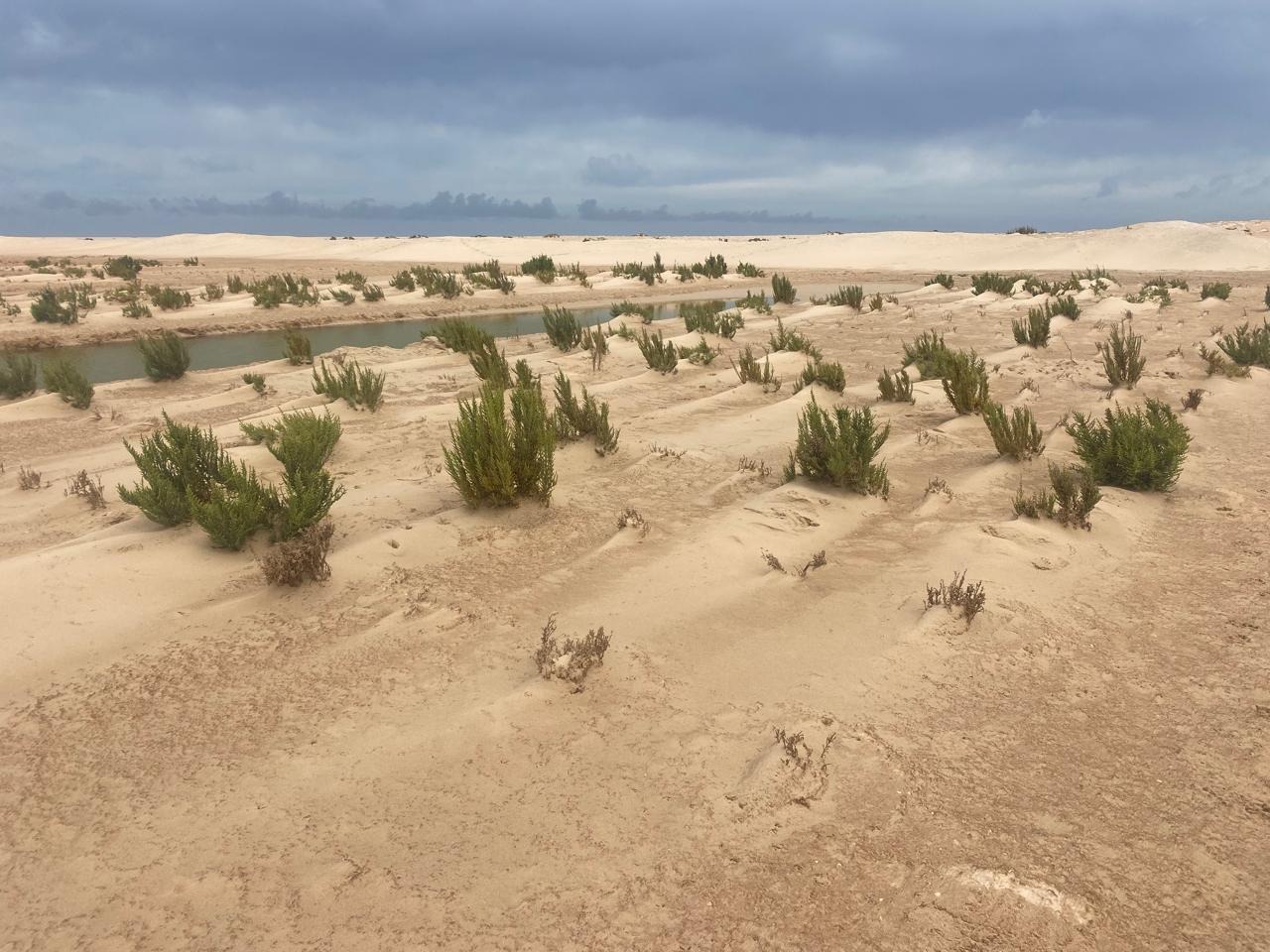
Salicornia is a focus of exploration. Vegetation and initial observations at Tamaya provide a starting point, not evidence of commercial OASIS crop yields. Other halophytes and algae will be assessed for salt tolerance, product quality and practical uses.
Agroforestry and drought-adapted trees
Trials are envisaged with moringa, Faidherbia albida (ana tree), Prosopis and other suitable trees. Potential benefits include shade, biomass, soil functions and local feed ingredients. Water demand, ecological suitability and possible invasive risks require site-specific assessment.
Explore Agroforestry & Bio-CCSCash crops – high-value specialty produce
Alongside feed and staple production, OASIS Farms will assess high-value crops such as capers, aloe vera, marjoram, thyme, mint and other culinary, medicinal and specialty plants. The objective is to maximize value generated per cubic metre of irrigation water. Drought-tolerant species may suit open-field cultivation; more water-demanding crops such as mint would require reliable irrigation and appropriate growing systems. Product quality, yields, processing needs, buyers and achievable prices will be evaluated for each location.
Feed crops and field cultivation
Sorghum, amaranth, suitable legumes and other adapted crops are being considered as ingredients for local feed and additional agricultural value. No reliable commercial yield is claimed at this stage.
Water as the limiting resource
Crop choices must match water availability, salinity and soil conditions. The use of recovered water and appropriate nutrient streams is a development objective rather than a proven routine operation.
What the ODD must demonstrate
Trial plots will document survival, yields, water use, salt tolerance, labour needs and market opportunities. Only validated crops should become part of the standard OASIS farm business model.
The business model is not intended to depend solely on fish and minerals: high-value cash crops could create additional revenue streams. Commercial yields and offtake remain to be validated.
Development status: field observations and planned trials. No commercial crop yields or secured offtake agreements are claimed.