One farm – a viable family enterprise
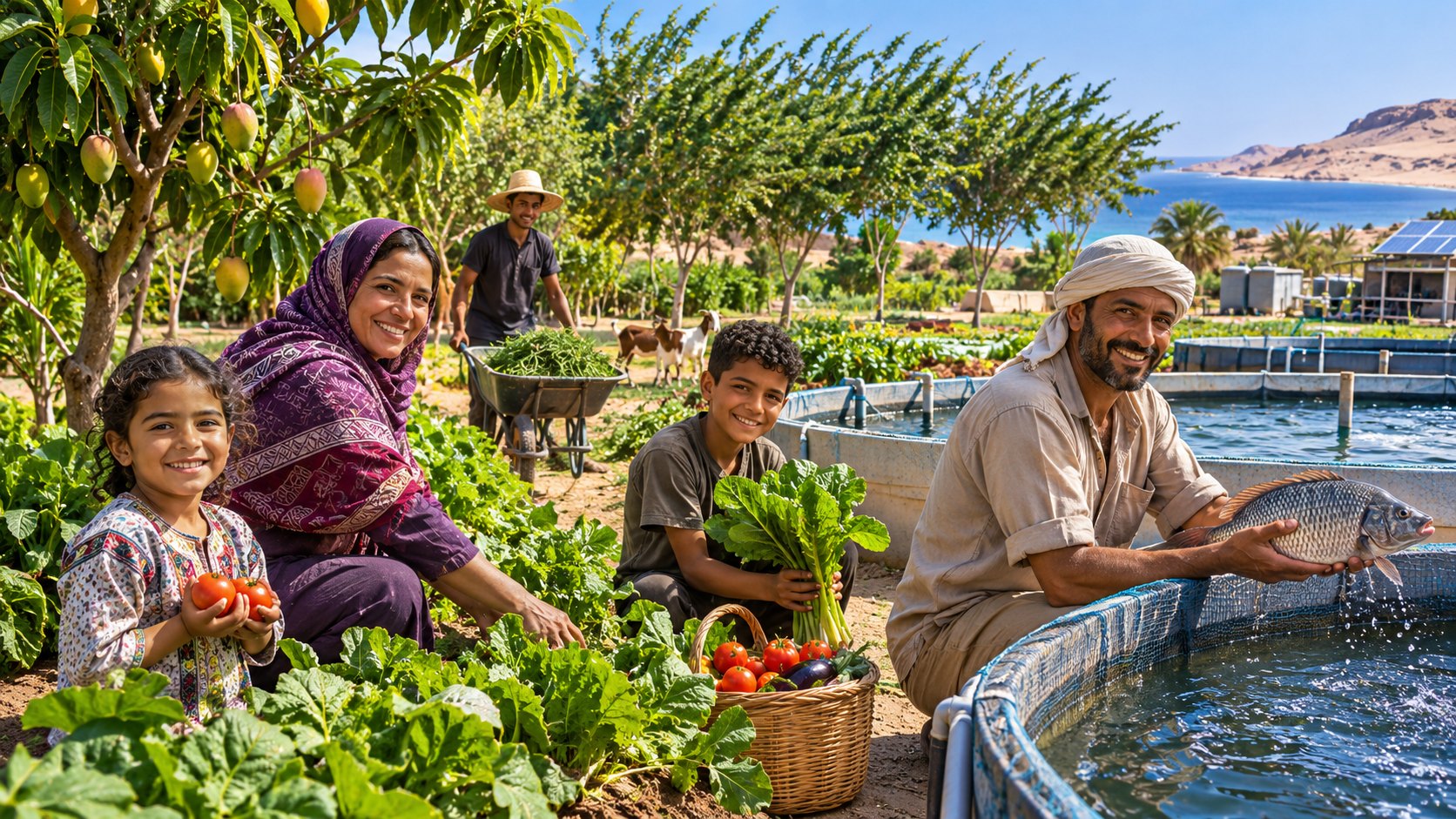
Farm size and equipment are designed around a viable family business, not maximum land area. The current planning reference is a standard farm of approximately 50 hectares, including water and production infrastructure. Actual workload, operator skills, profitability and the need for seasonal or specialist staff will determine the practical scale.
Self-provision as a starting point
Farms are intended to meet as many basic household needs as practical through their own production: food from aquaculture, vegetables and field crops, and where appropriate energy, water and other farm resources. Complete self-sufficiency is neither assumed nor demonstrated; essential supplies, services and goods will still be purchased.
Surpluses for local markets
Production for household needs forms the foundation. Marketable surpluses should then supply local and regional customers. Sales can contribute to family income, while additional food supplies can strengthen community food security. Demand, prices, cold chains and market access require site-specific validation.
Independent operators and shared support
Family operators should be able to run their farms as independent enterprises. OASIS may provide standardized modules, training, technical support and shared marketing services. Land tenure, ownership, financing and contractual arrangements must be agreed for each location.
Food security through distributed production
Rather than relying only on a few large production sites, OASIS envisions a network of family farms that distributes food production, incomes and practical skills across communities. Meaningful food-security benefits depend on affordability, consistent supply and functioning local markets.
What the Operational Due Diligence must demonstrate
The ODD will test whether the planned farm size strikes a workable balance between family income, investment, working hours and complexity. Measures include actual staffing needs, household consumption, marketable surplus, operating costs, production yields and the reliability of local sales channels.
Development objective: The viability of a family-run operation, degree of self-provision and contribution to local food security have yet to be demonstrated in practice.